
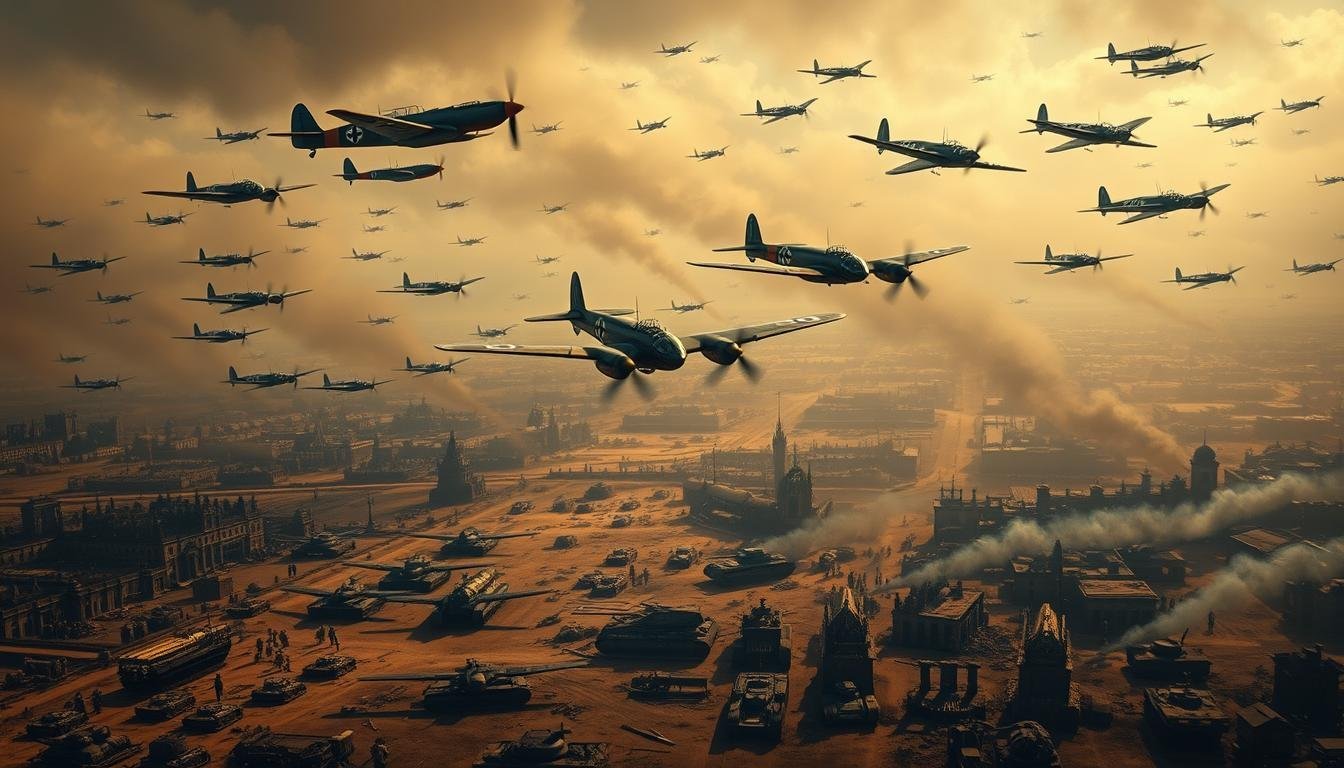
Why Did Hitler Stop the Blitz in June 1941? Have you ever wondered about the big decisions made during World War II? Especially Hitler’s decision to halt the Blitz campaign. The Blitz was a long bombing effort against the United Kingdom. It showed how good the Luftwaffe was at flying and bombing.
The Blitz started in September 1940. It involved bombing big British cities hard. The goal was to make the British give up and let Germany invade.
But by June 1941, Hitler chose to stop the Blitz. He moved his military to other important goals. Knowing why he did this helps us understand World War II better.
Contents
- 1 The Blitz: Background and Initial Strategy
- 2 The Scale and Impact of the Blitz on Britain
- 3 Why Did Hitler Stop the Blitz in June 1941?
- 4 Operation Barbarossa: The Eastern Front Priority
- 5 Alternative Theories and Considerations
- 6 Long-term Consequences of Halting the Blitz
- 7 Conclusion: Historical Significance of Hitler’s Decision
- 8 FAQ
- 8.1 What were the main reasons behind Hitler’s decision to stop the Blitz in June 1941?
- 8.2 How did the Blitz affect Britain’s infrastructure and economy?
- 8.3 What was the significance of Operation Barbarossa in relation to the Blitz?
- 8.4 How did the British government respond to the Blitz?
- 8.5 What role did radar and intelligence play in Britain’s defense against the Blitz?
- 8.6 How did the U.S. support Britain during the Blitz?
- 8.7 What were the long-term consequences of halting the Blitz?
- 8.8 What was the impact of the Blitz on British morale?
The Blitz: Background and Initial Strategy
As the Battle of Britain reached its peak, the Luftwaffe changed its plan. They launched the Blitz, a long bombing campaign against the United Kingdom. This move was to weaken British spirit and prepare for an invasion.
The shift from the Battle of Britain to the Blitz was a big change. The Luftwaffe started hitting British cities and civilians. They wanted to break their will to fight.
Targeting Civilian Morale
The Blitz aimed to lower British morale by bombing civilians. The Luftwaffe hoped to scare and confuse people by hitting homes and important places.
| Target | Objective | Expected Outcome |
|---|---|---|
| Civilian areas | Break morale | Widespread fear and chaos |
| Key infrastructure | Disrupt supply chains | Economic hardship |
| Military installations | Weaken defensive capabilities | Increased vulnerability to invasion |
Forcing British Surrender
The Luftwaffe thought more bombing would make Britain give up. They believed the constant attacks would wear down the British people.
Preparing for Potential Invasion
The Blitz also helped get ready for Operation Sea Lion, the invasion plan. By weakening defenses and disrupting supplies, the Luftwaffe aimed to make the invasion easier.
In summary, the Blitz had many goals, like hitting civilians, forcing Britain to surrender, and getting ready for an invasion. Knowing these goals helps us understand the Luftwaffe’s World War II tactics.
The Scale and Impact of the Blitz on Britain
The Blitz had a big impact on Britain’s buildings and people’s spirits. The German Luftwaffe bombed not just big cities but also smaller towns and rural areas. [Why Did Hitler Stop the Blitz in June 1941?]
London and Major Cities
London, being the capital, was a main target. Its docks, railway stations, and government buildings were hit often, causing a lot of damage. Other big cities like Birmingham, Liverpool, and Manchester also got hit hard, with their factories and homes damaged.
The Blitz aimed to weaken Britain’s factories and military. Factories, shipyards, and airfields were bombed to slow down the British war effort. This made it harder for Britain to make war materials and fight back against Germany.
Civil Defense Initiatives
The British government started many civil defense plans to fight the Blitz. They built air raid shelters, had blackout rules, and trained air raid wardens. These steps helped keep people’s spirits up.
RAF Night Fighter Development
The Blitz also made the RAF work harder to fight back at night. They got better at using radar and tactics to catch German bombers. This helped the RAF defend better against night attacks.
The Blitz was a big test for Britain, pushing its people and buildings to their limits. But thanks to defense efforts and military actions, Britain managed to stay strong.
- The Blitz led to significant loss of life and property.
- Civilian morale was tested but remained relatively resilient.
- The RAF’s night fighter capabilities improved significantly during this period.
Why Did Hitler Stop the Blitz in June 1941?
Hitler’s choice to end the Blitz in June 1941 was a major shift in the war. Several reasons led to this decision. These included the Luftwaffe’s losses, the Blitz’s failure to win key goals, worries about fighting on two fronts, and how to use resources. [Why Did Hitler Stop the Blitz in June 1941?]
The Luftwaffe lost many planes and skilled pilots during the Blitz. As time went on, the Luftwaffe’s bombing missions became less effective. This made the Blitz a less strong way to make Britain give up.
Failure to Achieve Strategic Objectives
The Blitz didn’t meet its main goals. Britain’s spirit stayed strong, and it kept making important war supplies. Since Britain wasn’t weakened, the Blitz’s purpose was questioned.
Two-Front War Concerns
Hitler grew more worried about fighting on two fronts as tensions with the Soviet Union rose. Stopping the Blitz was partly to get ready for Operation Barbarossa, the invasion of the Soviet Union. This needed a lot of military power.
Resource Allocation Decisions
Ending the Blitz let Hitler move resources to the Eastern Front. This showed his focus on the war against the Soviet Union over the Blitz against Britain. [Why Did Hitler Stop the Blitz in June 1941?]
In summary, Hitler’s choice to stop the Blitz in June 1941 was complex. It was due to the Luftwaffe’s weakening, the Blitz’s failure, worries about fighting on two fronts, and the need to shift resources. This move set the stage for Operation Barbarossa and had big effects on World War II.
Operation Barbarossa: The Eastern Front Priority
Hitler shifted his focus to the Eastern Front, causing the Blitz to slow down. Operation Barbarossa, launched in June 1941, was a huge invasion of the Soviet Union. It needed a lot of German military resources.
Luftwaffe Redeployment East
The Luftwaffe was key in Operation Barbarossa’s success. Many of its units moved to the Eastern Front. This move reduced airpower for the Blitz, leading to its decline.
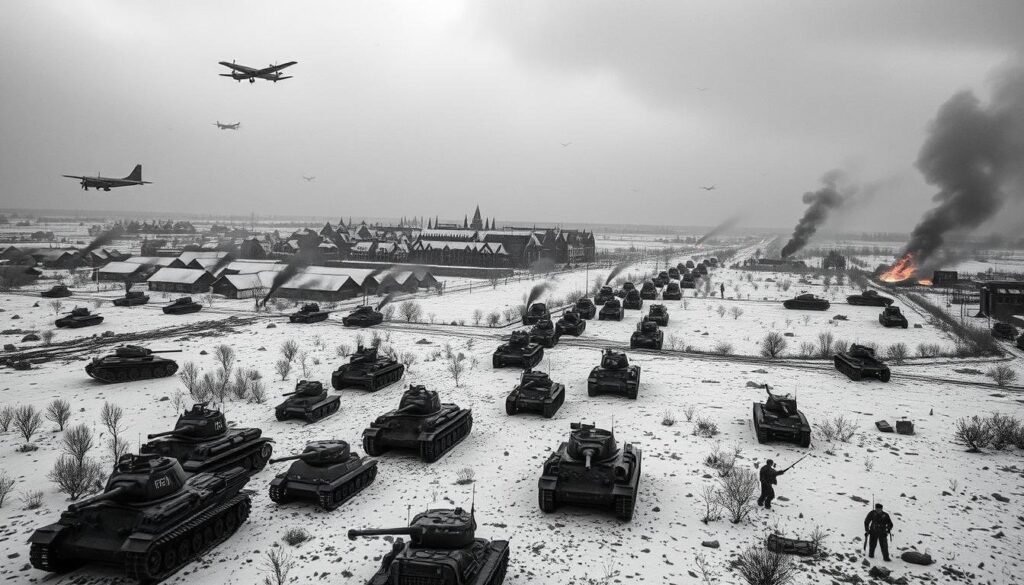
The timing of Operation Barbarossa was influenced by several factors. Hitler wanted to finish the campaign before winter. He also feared British and Soviet cooperation, making a strike against the Soviet Union a top priority.
Lebensraum and Anti-Bolshevism
Hitler’s decision to launch Operation Barbarossa was also driven by ideology. He wanted to secure Lebensraum (living space) for Germans and eliminate Bolshevism. These goals were central to his strategic plans. [Why Did Hitler Stop the Blitz in June 1941?]
Strategic vs. Ideological Priorities
Hitler’s decision-making was a mix of strategy and ideology. Operation Barbarossa aimed at both military and ideological goals. It showed Hitler’s ambition to expand Germany and eliminate threats.
Alternative Theories and Considerations
Why did Hitler stop the Blitz? Several theories offer insights into this choice. As the war went on, many factors led to a shift in strategy.
The British made big leaps in radar technology. This allowed them to spot and fight back against German air raids better. This technological advancement was key in fighting off the German air campaign.
Night Fighter Successes
Night fighter tactics also saw big wins. The British used new strategies and tech to catch German bombers at night. These victories were a big part of Hitler’s decision-making.
U.S. Support for Britain
The Lend-Lease Act and other U.S. help boosted Britain’s defenses. This economic and military aid helped fight off the German attacks. This support was a big deal for Hitler. [Why Did Hitler Stop the Blitz in June 1941?]
German Attempts at Isolating Britain
Hitler also tried to cut Britain off economically and militarily. Understanding Britain’s responses to these efforts is key to seeing the bigger picture. [Why Did Hitler Stop the Blitz in June 1941?]
| Factor | Impact on Blitz | Significance |
|---|---|---|
| Radar Technology | Improved British detection and response | High |
| Night Fighter Tactics | Successful interception of German bombers | High |
| U.S. Support | Economic and military aid to Britain | Significant |
| German Isolation Attempts | Economic and military pressure on Britain | Moderate |
These theories and factors show how complex Hitler’s decisions were. By looking at these, you get a better view of the war’s strategy.
Long-term Consequences of Halting the Blitz
Stopping the Blitz in June 1941 had big effects on World War II. It changed things for Germany and Britain. Britain’s industrial recovery was one of the first things to change.
Industrial Recovery
With the Blitz stopped, Britain could rebuild and recover industrially. Factories could work without being bombed, boosting production. This helped Britain keep fighting the Axis powers. [Why Did Hitler Stop the Blitz in June 1941?]
Morale and National Unity
Stopping the Blitz also boosted British morale and unity. People felt relieved and united, which was key for supporting the war.
For Germany, stopping the Blitz meant spreading out resources. They had to fight on the Eastern Front against the Soviet Union. This weakened their military strength.
Lost Opportunity to Neutralize Britain
Germany might have weakened Britain too much if they kept bombing. This could have made Britain surrender or greatly reduce its war role.
In summary, stopping the Blitz had many effects. It changed industrial recovery, morale, resource use, and the war’s strategy. [Why Did Hitler Stop the Blitz in June 1941?]
Conclusion: Historical Significance of Hitler’s Decision
You’ve learned about the complex reasons behind Hitler’s choice to stop the Blitz in June 1941. This key moment in WWII strategy had big effects, changing the war’s path and its end.
Hitler’s move to stop the Blitz and focus on Operation Barbarossa was a big change for Nazi Germany. This decision was crucial because it let the British recover from the bombing.
Learning about Hitler’s decision helps us understand WWII better. It shows how this choice affected the war’s story, leading to the Allies’ victory.
Studying Hitler’s decision-making and its effects still teaches us a lot today. Thinking about WWII helps us see how important historical events are. [Why Did Hitler Stop the Blitz in June 1941?]
FAQ
What were the main reasons behind Hitler’s decision to stop the Blitz in June 1941?
Hitler stopped the Blitz for several reasons. The Luftwaffe had lost too many planes. They also failed to meet their strategic goals. Plus, Hitler worried about fighting on two fronts and how to use resources wisely.
How did the Blitz affect Britain’s infrastructure and economy?
The Blitz hit Britain hard. Cities like London were bombed a lot. Industrial and military targets were also attacked. [Why Did Hitler Stop the Blitz in June 1941?]
What was the significance of Operation Barbarossa in relation to the Blitz?
Operation Barbarossa changed Germany’s strategy. Hitler moved Luftwaffe forces to the Eastern Front. This stopped the Blitz and focused on invading the Soviet Union.
How did the British government respond to the Blitz?
The British government took action. They started civil defense efforts. They also worked on RAF night fighter capabilities to fight back against the Luftwaffe.
What role did radar and intelligence play in Britain’s defense against the Blitz?
Radar and intelligence were key. They helped the RAF track and fight off Luftwaffe raids. [Why Did Hitler Stop the Blitz in June 1941?]
How did the U.S. support Britain during the Blitz?
The U.S. helped Britain a lot. They gave economic and military aid. This helped Britain defend against the Luftwaffe.
What were the long-term consequences of halting the Blitz?
Stopping the Blitz helped Britain recover. It boosted morale and unity. But, it also meant Germany had to spread resources thin across many fronts.
What was the impact of the Blitz on British morale?
The Blitz was tough at first. But, it made Britain stronger. The people came together against the Nazi threat.

Jayceon Schaefer, a social worker from Wailuku, Hawaii, is passionate about history. He created HitlerStory.com to share his deep interest in Adolf Hitler and explore complex historical topics through writing.