
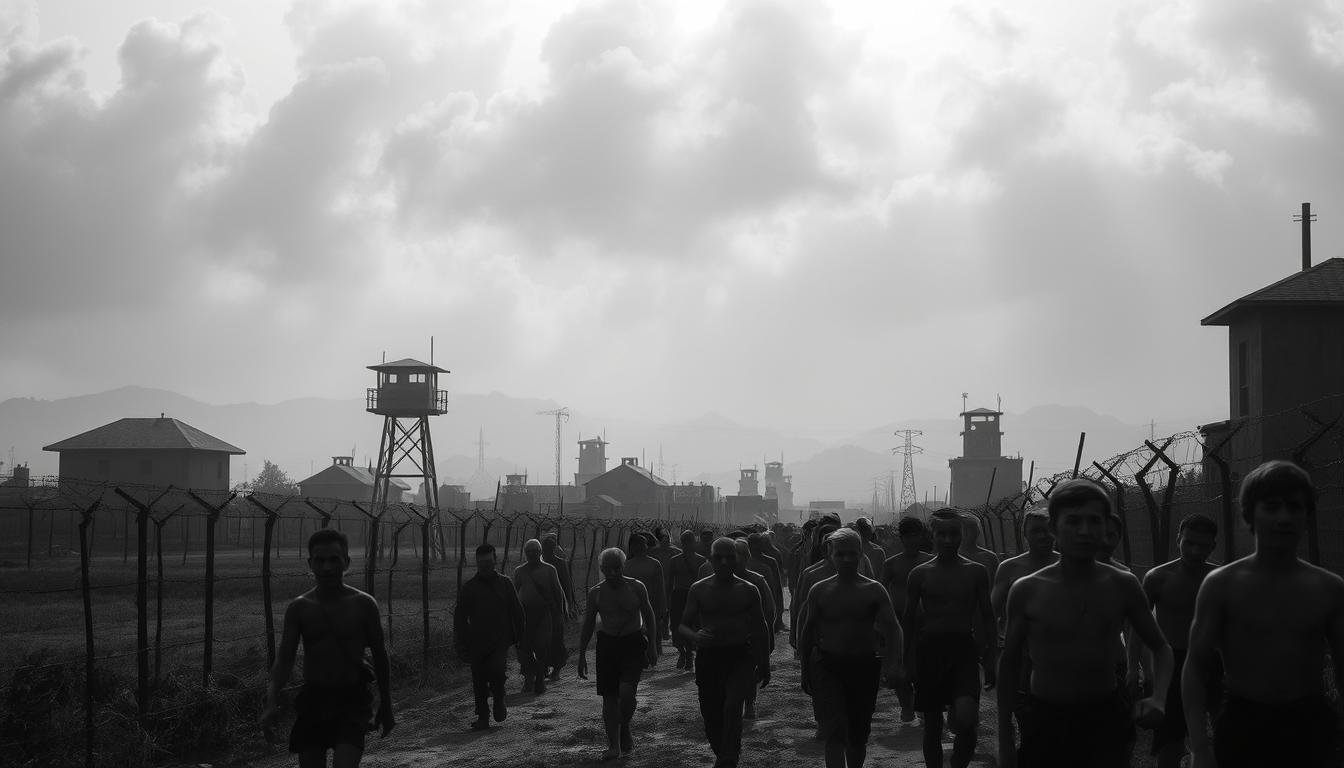
Reasons Behind Hitler’s Concentration Camps: You are about to explore one of the darkest times in modern history. This is the era of Nazi Germany and its infamous concentration camps.
The Holocaust’s atrocities serve as a stark warning against extremism and hatred. As you learn about Hitler’s concentration camps, you’ll understand the events leading to the persecution and murder of six million Jews and millions more seen as undesirable by the Nazis.
It’s vital to understand the historical context and significance of these camps. This knowledge helps us fully grasp the tragedy’s scale. You’ll see why it’s important to explore this dark chapter in history.
Contents
- 1 The Historical Context of Nazi Germany
- 2 What Was the Purpose of Hitler’s Concentration Camps?
- 3 The Evolution of the Camp System (1933-1945)
- 4 The Victims and Their Experiences
- 5 Conclusion: Reasons Behind Hitler’s Concentration Camps
- 6 FAQ
- 6.1 What were Hitler’s concentration camps used for?
- 6.2 What was the role of slave labor in the concentration camps?
- 6.3 How did the concentration camp system evolve over time?
- 6.4 Who were the primary victims of the concentration camps?
- 6.5 What can we learn from the history of Hitler’s concentration camps?
- 6.6 How did the Nazi party rise to power?
The Historical Context of Nazi Germany
Exploring Nazi Germany’s history is key. It shows how the Nazi party rose to power. The Nazi regime took control in 1933, thanks to economic troubles, political unrest, and social issues.
The Weimar Republic, formed after World War I, struggled with inflation and joblessness. These problems made extremist views like Nazism popular. [Reasons Behind Hitler’s Concentration Camps]
- The appeal of Nazi propaganda and its promise to restore German honor and prosperity.
- The political maneuvering of Adolf Hitler, who became Chancellor in 1933.
- The Enabling Act of 1933, which allowed Hitler to bypass the Reichstag and consolidate power.
Once in power, the Nazis started to get rid of opposition and target minority groups. They set up concentration camps. These camps were used to scare people and stop dissent.
Understanding Nazi Germany’s history and its role in World War II is crucial. It helps us see why concentration camps were used. This context sheds light on the Nazi regime’s brutal actions. [Reasons Behind Hitler’s Concentration Camps]
What Was the Purpose of Hitler’s Concentration Camps?
To understand Hitler’s concentration camps, we must look at the Nazi regime’s goals. These camps were key to their plans, used for oppression, control, and exploitation.
The Nazi regime targeted groups they saw as threats. They focused on political, social, and ideological enemies. This was not random but a systematic effort.
Targeting Communists, Socialists, and Political Dissidents
The Nazis saw communists, socialists, and dissidents as threats to their power. They used camps to silence these groups. The camps helped the Nazis get rid of political opposition, solidifying their control.
- Communists and socialists were among the first targeted by the Nazi regime.
- Political dissidents were arrested without trial, often called “protective custody.”
- Persecuting these groups was crucial for the Nazi’s goal of a totalitarian state.
Slave Labor for German Industry and the War Effort
Camps were also used for slave labor. Prisoners worked under harsh conditions, helping German industry and the war effort. As the war went on, Germany needed more labor, making slave labor crucial. [Reasons Behind Hitler’s Concentration Camps]
- Prisoners worked in various industries, like manufacturing and construction.
- Working conditions were deadly, with prisoners facing starvation, exhaustion, and brutality.
- The economic gain from camp prisoners helped the German war effort.
Hitler’s concentration camps served two main purposes: political control and economic gain. Understanding this helps us see how totalitarian regimes work. It also shows why protecting human rights and democracy is so important.
The Evolution of the Camp System (1933-1945)
The Nazi concentration camp system started in 1933 and ended in 1945. It changed over time due to different reasons. The early camps were often improvised, using existing infrastructure such as abandoned buildings or prisons.
As the Nazi regime grew stronger, more camps were built. By the mid-1930s, the SS, led by Heinrich Himmler, took over the camps. They turned them into a key tool for fear and control. More camps were built, often in hard-to-reach places. [Reasons Behind Hitler’s Concentration Camps]
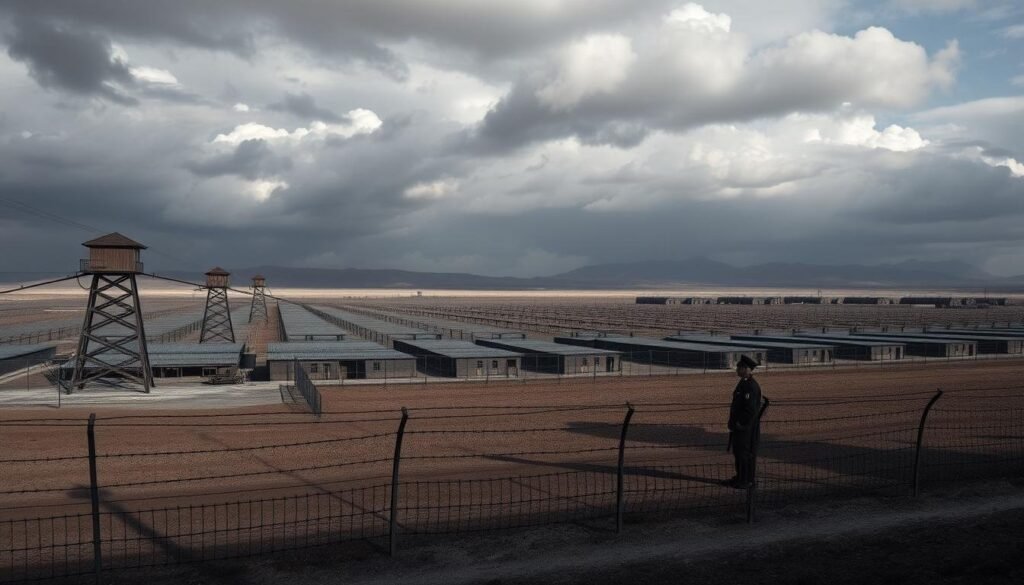
World War II changed the camps a lot. The Nazi regime got bigger, and the camps helped with the war. They provided forced labor for the German army. The camps filled up with prisoners from occupied areas, including Jews, Poles, and others.
As the war went on, life in the camps got worse. Prisoners faced hard work, hunger, and brutal treatment. The Nazi camp system became known for its cruelty. It was a big part of the Holocaust, where Jews and others were hunted and killed. [Reasons Behind Hitler’s Concentration Camps]
By 1945, the camp system had grown a lot. It covered many parts of Nazi-occupied Europe. When the Allies moved into Germany, they found the camps. This showed the world the horrors that happened there.
The Victims and Their Experiences
The stories of survivors and victims of concentration camps are heart-wrenching. They give us a deep look into the horrors of the Holocaust. By hearing their personal tales, we understand the human cost of Nazi atrocities better.
The experiences of those in the camps were brutal and dehumanizing. Many were forced to work hard, starved, and treated harshly by guards. The psychological impact of such trauma was profound, leaving lasting scars on survivors and their families.
| Category | Experiences | Notable Facts |
|---|---|---|
| Prisoners | Forced labor, starvation, brutal treatment | Millions were imprisoned, with high mortality rates |
| Survivors | Trauma, loss of family, rehabilitation challenges | Many survivors dedicated their lives to sharing their stories |
| Victims | Mass executions, gas chambers, medical experiments | The Holocaust resulted in the deaths of six million Jews and millions of others |
It’s key to understand the concentration camp experiences to fully grasp Nazi atrocities. The stories of victims remind us of the need for tolerance and preventing future atrocities.
Reflecting on the victims and their experiences shows the Holocaust’s lasting impact. It serves as a warning for future generations. [Reasons Behind Hitler’s Concentration Camps]
Conclusion: Reasons Behind Hitler’s Concentration Camps
You’ve seen how Hitler’s concentration camps devastated lives during World War II. The Holocaust’s legacy reminds us of the Nazi regime’s atrocities, leading to millions of deaths. Today, survivors and their families share their stories to teach us about tolerance and understanding.
Reflecting on history’s lessons, we see why remembering the past is key. The Holocaust warns us about hatred, prejudice, and extremism. We must keep learning and promote respect, empathy, and understanding.
The Holocaust’s impact will last for many generations. You can help keep history’s lessons alive by talking about it, supporting education, and fostering tolerance in your community.
FAQ
What were Hitler’s concentration camps used for?
Hitler’s concentration camps were places where people who opposed the Nazi regime were held. This included communists, socialists, and political dissidents. Also, Jews, Romani people, and other minority groups were targeted. [Reasons Behind Hitler’s Concentration Camps]
What was the role of slave labor in the concentration camps?
In the concentration camps, slave labor was crucial for German industry and the war effort. Prisoners were forced to work in harsh conditions. They worked in manufacturing, construction, and agriculture.
How did the concentration camp system evolve over time?
The concentration camp system grew a lot between 1933 and 1945. It started small but became a vast network of camps and sub-camps. The number of prisoners and the cruelty of the conditions increased over time.
Who were the primary victims of the concentration camps?
Jews were the main victims of the concentration camps. They faced systematic persecution and extermination. Other minority groups, like Romani people, LGBTQ+ individuals, and people with disabilities, were also targeted. [Reasons Behind Hitler’s Concentration Camps]
What can we learn from the history of Hitler’s concentration camps?
The history of Hitler’s concentration camps teaches us about the dangers of totalitarianism, racism, and xenophobia. It shows the importance of protecting human rights and promoting tolerance. It also reminds us to prevent similar atrocities in the future.
How did the Nazi party rise to power?
The Nazi party gained power in Germany in the early 1930s. They used economic instability, social unrest, and national grievance to their advantage. Adolf Hitler became Chancellor in 1933. He used propaganda, intimidation, and violence to consolidate power.

Jayceon Schaefer, a social worker from Wailuku, Hawaii, is passionate about history. He created HitlerStory.com to share his deep interest in Adolf Hitler and explore complex historical topics through writing.